


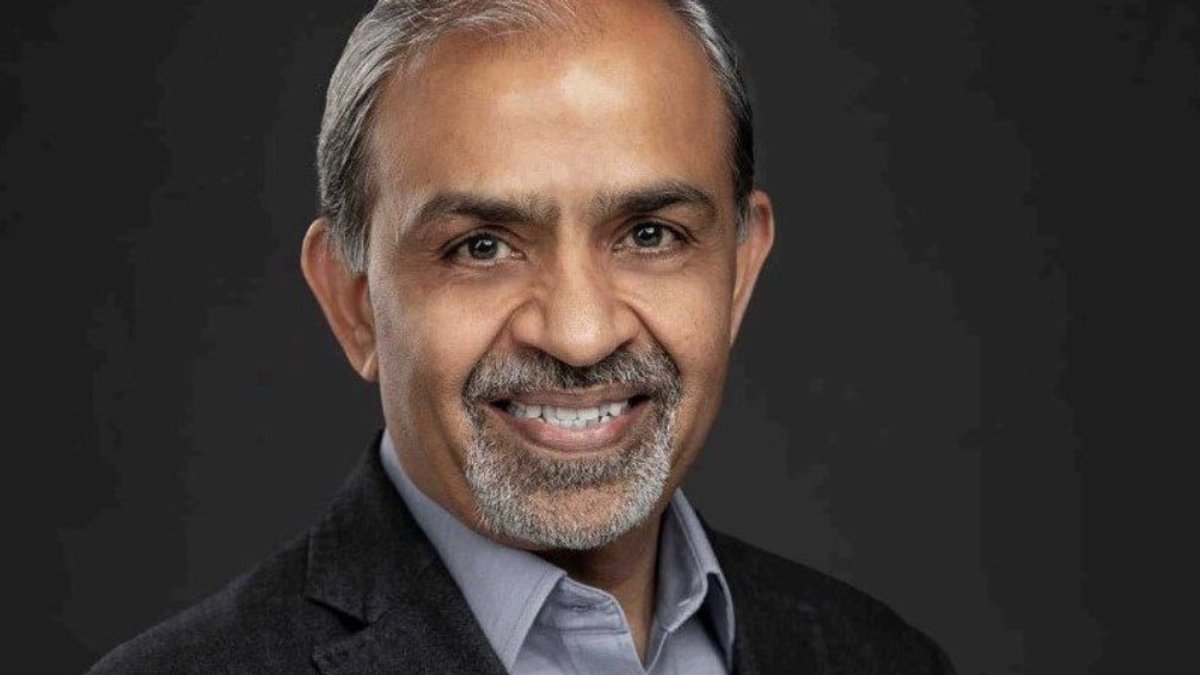
Sunil Taldar calls on telecom operators to open infrastructure.
As Chief Executive Officer of Airtel Africa, the executive argued in a recent interview that sharing equipment and spectrum is the most cost-effective way to expand coverage and reach more customers. Taldar made the remarks during an interview with Arise News on Friday, where he highlighted the financial strain of independent network expansion.
Sharing Infrastructure to Cut Costs
The executive argued that colocation and shared infrastructure are necessary to penetrate underserved communities. He used the example of fibre deployment to illustrate the problem. If Airtel and a competitor both lay 1,000 kilometres of fibre in the same area, the investment is wasted.
Related: Revolutionizing Internal Landscapes: The Remarkable Evolution of Modern Endoscopic Technology
“We’re duplicating fibre,” Taldar said. “If we share fibre, the same 1,000 kilometres of fibre on which our network can run and the competitor’s network can run the other 1,000 kilometres that we’ve saved covers another 1,000 in another area. So what we’re doing is we are removing duplication of investment in a manner that benefits the entire ecosystem.”
This logic extends to heavy assets like towers and base stations. In March 2025, Airtel and MTN announced plans to share these assets specifically in Nigeria and Uganda. The stated goal is to lower operational expenses and avoid duplication of expensive infrastructure. By relying on shared facilities, the companies hope to redirect capital toward network quality and expansion rather than digging the same holes twice.
Satellite Partnerships for Underserved Areas
Taldar addressed coverage challenges that physical infrastructure cannot solve. Africa is not fully covered, and in many sparsely populated areas, putting up a tower and laying fiber is not economically viable. This creates a difficult choice for operators.
The CEO outlined three options for these remote regions. One is to ignore the areas entirely, leaving large populations disconnected. The second is to fund infrastructure installation regardless of the cost, which makes no economic sense. He rejected both choices.
Related: Exploring Pafikotcurup.org: A Digital Portal to Curup’s Untold Wonders
The third option is the partnership with Starlink. Satellite technology can provide connectivity where terrestrial networks do not reach. “And that is the reason we signed up this agreement with Starlink,” Taldar explained, noting that terrestrial limitations require such innovation. This approach has already moved forward in the Democratic Republic of the Congo. In early August, Airtel launched Africa’s first commercial satellite-to-mobile service. The rollout in the DRC demonstrates the practical application of this strategy. Plans are already nearing launch in Kenya, with the ultimate goal of extending this capability across Airtel’s 14 African markets.
This convergence of terrestrial sharing and satellite technology suggests a fundamental change in how African connectivity is financed. Instead of every carrier attempting to build a solitary, expensive network layer, they are pooling resources to serve the hardest-to-reach spots. This is financially challenging for individual businesses, yet it creates a more complete digital infrastructure for the continent, potentially bridging the gap between urban hubs and rural villages without requiring a massive influx of capital for every single project.
Expanding the Market
The direct-to-cell agreement with Starlink changes that equation dramatically. A small enterprise in a rural area has the same right to operate as one in an urban area, but they lack access to connectivity in the absence of a terrestrial network. With Starlink connectivity or satellite connectivity, we can solve that problem, Sunil Taldar, Airtel Africa CEO, explained.